In the world of digital growth, the debate around organic vs paid marketing often casts them as competitors, battling for budget and attention. However, the most successful digital strategies recognize that organic and paid marketing channels are interdependent.
Paid advertising (PPC) is designed to drive immediate traffic and conversions, while organic marketing (SEO) nurtures long-term visibility and builds crucial brand familiarity. When used strategically, they are force multipliers designed to nurture both immediate traffic and long-term brand equity, ensuring your marketing achieves superior ROI.
Consider the typical user journey: someone might see a paid ad, then later Google your brand, click the organic listing, and ultimately convert. Attributing that success to a single channel misses the fundamental power of an integrated marketing strategy.
Paid Data Makes Organic Smarter
Paid campaigns serve as a rapid, high-impact testing ground for your organic search strategy. Paid Data offers immediate, tangible insights that can drastically improve your marketing efforts. Paid campaigns quickly reveal high-converting keywords, the messaging that resonates most strongly with your target audience, and the offers that are driving immediate action.
You can then use this rich paid search query data to:
- Optimize SEO titles and meta descriptions for existing content.
- Build new, high-value content around proven, high-intent terms.
- Improve the on-page messaging of your core landing pages.
In essence, your paid investment accelerates the learning curve for your entire organic and paid search strategy.
Organic Strengthens Paid Performance
Just as PPC helps to refine organic, a strong organic presence can dramatically improve your paid advertising efficiency. Higher brand recognition, built through consistent SEO, naturally lowers your paid cost-per-click (CPC) by increasing quality clicks. Organic blog traffic is an invaluable source for feeding high-intent retargeting audiences for your paid campaigns.
A strong organic presence also directly increases your Quality Score in Google Ads, reducing ad costs and improving visibility. Quality scores are made up of three components: landing page experience, ad relevance and click-through-rate. A strong landing page with relevant content, fast load times, and clear alignment with ad messaging improves user experience and encourages more clicks.
Many SEO best practices such as improving page speed, creating relevant content, and aligning pages with search intent also strengthen landing page experience and ad relevance, which can lead to higher Quality Scores and more efficient paid campaigns. Ultimately, organic helps build the ecosystem that paid thrives in.
Trust Behavior: Users Click Both
In the modern digital landscape, seeing your brand twice on the same Search Engine Results Page (SERP)—in both the paid listing and the organic result—increases the user’s perception of your authority and credibility. This SERP domination closes the “Trust Gap.” Many users may skip ads but convert later after encountering your brand organically, while others click ads first but verify legitimacy through organic listings. Showing up in the paid listing, organic result, and local map pack gives you a high chance of converting the user.
The Psychological Side of Marketing Channels
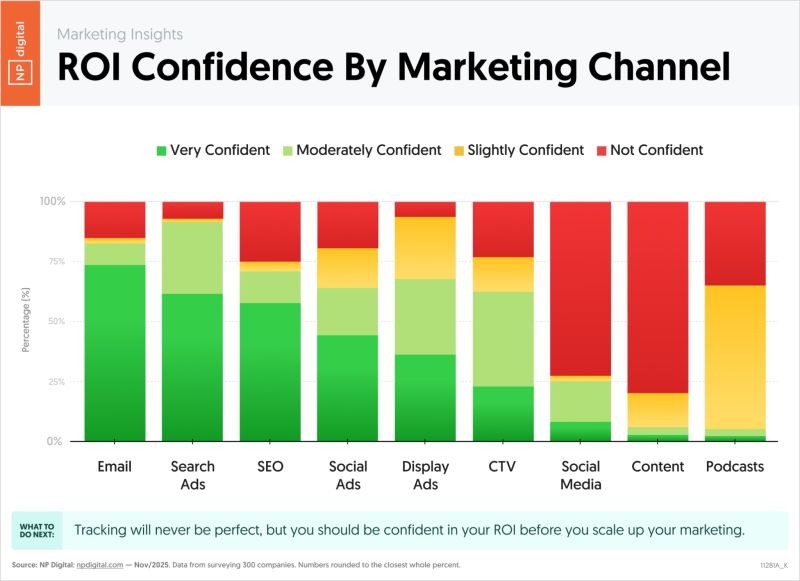
The myth of competition often stems from the different ways marketers perceive the effort. Marketers often “feel” more confident in paid channels because of immediate gratification, clear, instant dashboards, budget control, and fast feedback loops. Conversely, maximizing marketing ROI from organic requires patience, trust in the process, and time. This difference in feedback speed can lead to an undervaluation of long-term organic equity.
Neil Patel, Co-Founder of Neil Patel Digital, created the visual below to illustrate this point. You can see a clear trend: when marketers are investing in paid channels, they feel confident in their ROI—but when it comes to organic efforts, confidence drops significantly. Confidence especially drops when it comes to their own content.
Source: npdigital.com
The reality, however, is that this perception can be misleading. Organic and paid channels don’t operate independently; they work together to support the full marketing funnel and drive overall results.
Paid Fills Gaps While Organic Builds
An effective organic and paid marketing strategy recognizes the distinct timeline of each channel. The experts at TruNorth Advisors understand the difference and how to achieve both quick visibility wins and long-term success for the brand.
Key Scenarios where PPC Buys Time:
- New Website Launch: Paid carries your pipeline and generates organic vs paid traffic while SEO builds authority.
- Seasonal Campaigns: Paid boosts visibility fast for time-sensitive promotions.
- Highly Competitive Keywords: Paid bridges the gap for highly competitive terms where ranking organically is challenging.
- Ranking on Page 2: Paid captures traffic immediately while your organic efforts climb to page 1.
Tracking is Crucial to Multichannel Success
If you are looking to move past the organic vs paid advertising debate and maximize your Marketing ROI, proper tracking is key. Many businesses undervalue organic because they don’t invest in proper SEO tracking.
At TruNorth Advisors, our mission is to provide visibility into performance by ensuring proper tracking is set up from day one, across all your platforms and channels. We implement and monitor GA4 event tracking, conversion goals, attribution modeling, and more. Contact us today to see what we can do for you.
Article Summary
- Organic and paid marketing aren’t rivals. They are force multipliers that drive greater results when used together.
- Paid advertising provides immediate data that can be used as a testing ground to make your organic strategy and SEO more effective.
- An integrated marketing strategy is essential because a strong organic presence improves paid performance, and users often click both organic and paid listings to verify authority.